Why did the water pressure drop in your West County home? Four causes cover the vast majority: a failing pressure reducing valve, mineral scale narrowing older pipes, a partially closed or failing valve somewhere on the supply path, or a leak stealing flow before it reaches you. Each has a different fix, and the diagnosis is cheaper than the guessing.
Cause 1: The Pressure Reducing Valve (PRV)
Most municipal-supplied homes run a PRV where the main enters, stepping street pressure down to household levels. PRVs age: springs weaken, seats collect debris, and output drifts low. The tell is whole-house pressure that has slid slowly over months, sometimes with hammering or humming earlier in the decline. PRV replacement is a routine, same-morning job and restores design pressure instantly.
Cause 2: Mineral Scale in Aging Pipes
Decades of mineral-rich water leave deposits inside copper and, worse, galvanized steel. The pipe’s inner diameter shrinks year by year, and pressure at the faucet fades with it, worst at the end of long runs. Our region’s water accelerates this, and established neighborhoods east of Clarkson Road see it most. Spot treatment does not exist for scale; the honest fixes are re-piping the affected runs or accepting the curve. The same mineral story applies inside water heaters, which is why annual flushing pairs with any pressure conversation.
Cause 3: Valves Half-Open on the Supply Path
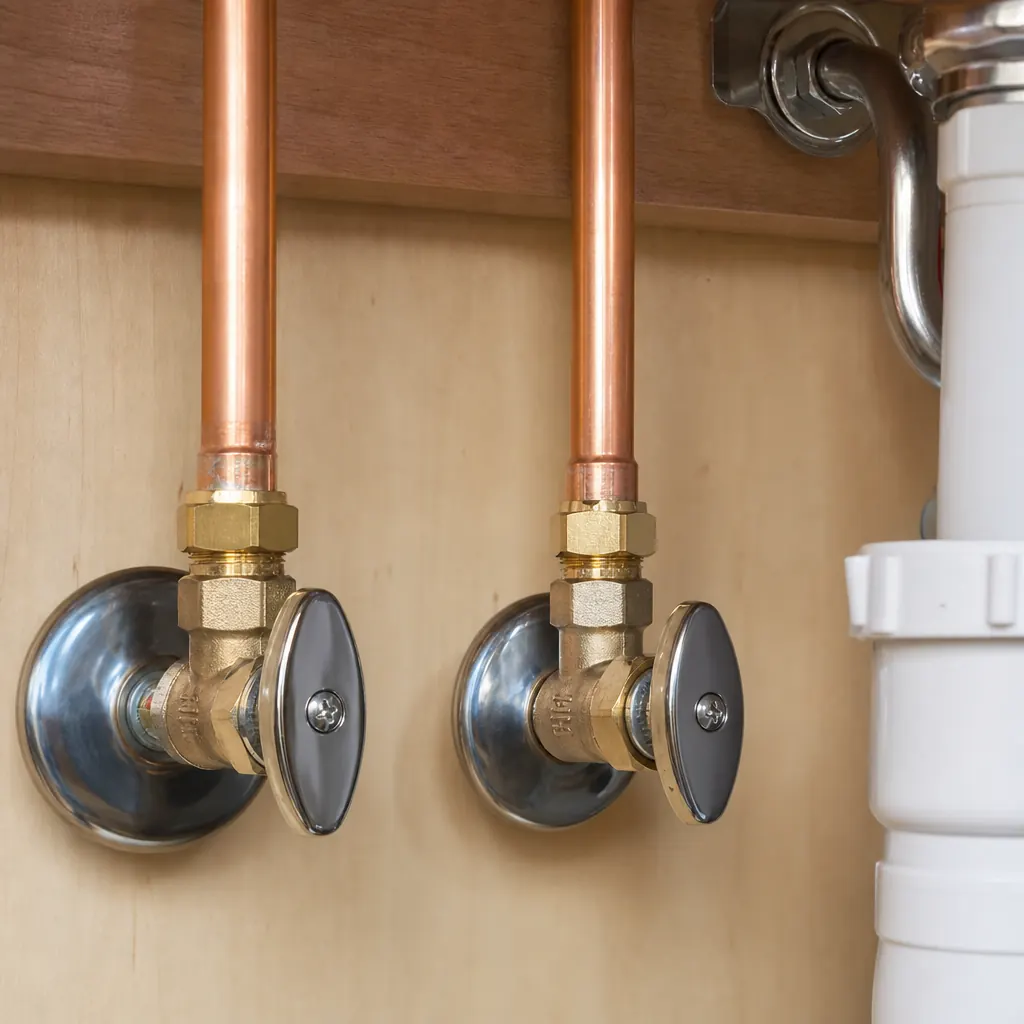
The main shut-off, the meter valve, fixture stops: any of them left partially closed after a repair quietly throttles the house. Ball valves should sit parallel to the pipe; gate valves should stop turning firmly. We find half-open valves more often than homeowners would guess, usually after some past project someone forgot about.
Cause 4: A Leak Stealing Your Flow
A pressurized leak in a service line or under a slab diverts water before it reaches your fixtures, and the bill notices before the shower does. Unexplained pressure loss plus a meter spinning with everything off equals a detection visit. Our slab leak detection finds those quietly, and the emergency team handles the active versions.
The Diagnostic Sequence We Run
- Measure, do not guess: a gauge at a hose bib tells us the actual static and flowing pressure numbers.
- Triage by scope: fixture, branch or whole house, per the box above.
- Inspect the PRV and valves: the cheap, common culprits get checked before walls get opened.
- Test for leaks: meter isolation confirms or clears the quiet thief.
- Quote the fix in writing: from a $20 aerator to a planned re-pipe, with the numbers side by side.
One Disclaimer Worth Reading
City-side pressure problems exist too: main breaks and hydrant flushing drop neighborhood pressure temporarily, and the utility owns that side. If your neighbors all lost pressure the same afternoon, the phone call goes to the water utility first. When the neighborhood is fine and your house is not, that is our department, and the diagnosis starts with a gauge, not a guess.
Pressure Numbers, Explained Simply
A ten dollar thread-on pressure gauge turns a vague complaint into a number, and the number sorts the suspects. Screw it onto an outdoor spigot with nothing else running. Somewhere between forty and sixty psi is the comfortable household band most fixtures and appliances are designed around. Readings consistently below that point toward supply-side causes: a drifting PRV, a partially closed valve, a leak, or utility work in the neighborhood. Readings in the band at the spigot but weak at a distant upstairs shower tell a different story, one of restrictions inside the house: scale-narrowed runs, clogged aerators or cartridges, or long undersized branches serving far bathrooms. Write the number down with the date and repeat after any municipal work nearby; a baseline makes drift visible months before your morning shower would notice. Bring that note to any service visit. A technician who starts with your gauge history skips an hour of rediscovery, and the diagnosis lands on the real cause instead of the loudest symptom.One caution on DIY patience: sudden whole-house pressure loss, pressure that drops when the water heater or softener runs, or any pressure change that arrives alongside damp spots or a spinning meter deserves a phone call rather than another weekend of theories. Those patterns point past the cheap fixes and toward causes that get more expensive while you experiment.