How long should your water heater last before replacement makes more sense than repair? In our region’s mineral-heavy water, most tank units serve about a decade, give or take the maintenance they received. Age starts the clock, but seven specific signs tell you where the tank actually stands.
The Seven Signs, Ranked by Urgency
1. Water pooling at the base (act now)
Moisture tracking from the tank seam or weeping from the wall of the tank itself is structural failure. Fittings and valves can be replaced; tank walls cannot. If the leak source is the tank, the replacement conversation is already over, and our same-day replacement service exists for exactly this morning.
2. Rust-colored hot water (act soon)
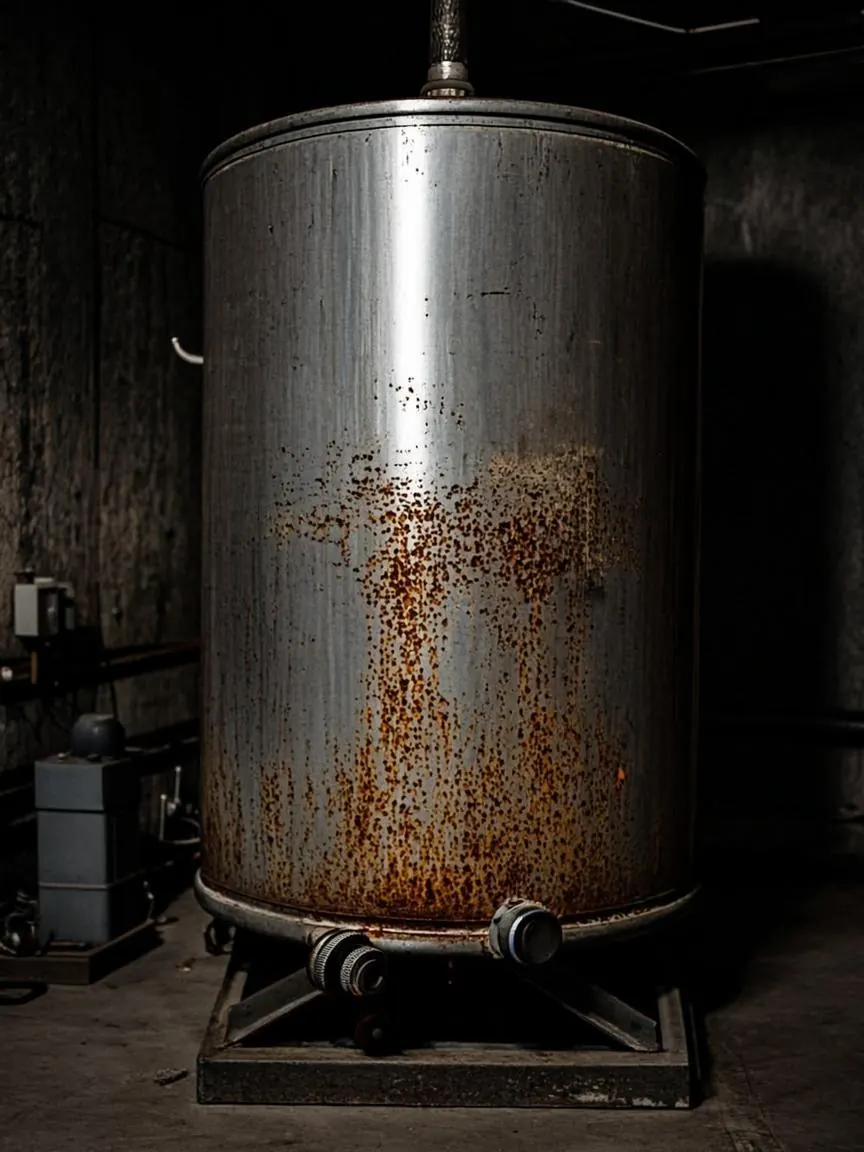
Discolored hot water means corrosion inside the tank has reached your fixtures. A spent anode rod can be swapped early in life and buys years; once the tank liner itself is rusting, the clock is days-to-months, not years.
3. Rumbling or popping during heating (maintain)
Hardened sediment on the tank bottom traps steam bubbles, and the pop-crackle soundtrack is efficiency bleeding away. A professional flush often quiets it and restores recovery speed. Skipped for years, the sediment accelerates liner failure.
4. Hot water running out early (diagnose)
Shorter showers usually mean a failed lower element on electric units, a dipping tube fault, or crossover somewhere in the plumbing. All are repairable; the visit tells you which.
5. Repeated repairs in a short window (decide)
One failed element is maintenance; three service calls in two years is a tank negotiating its retirement. Add the invoices, compare against replacement, and the math usually speaks for itself.
6. Inconsistent temperature (check the valve)
Fluctuating output on a gas unit often traces to the control valve or thermocouple; on electric units, a thermostat. Repairable, yes, but on an older tank it is one more vote for replacement.
7. The unit is simply past ten (plan)
No symptoms yet? Great. Plan the replacement on your calendar rather than the tank’s: schedule the swap during business hours, pick the model, avoid the emergency premium that never applies with us but always applies to your morning.
Repair or Replace: The Decision Grid
| Situation | Sensible call |
|---|---|
| Under 8 years, single part failed | Repair with confidence |
| 10+ years, first failure | Repair for time, budget for replacement |
| Tank-wall leak, any age | Replace; walls do not repair |
| Repeated faults, rising bills | Replace and stop the drip-drip of invoices |
The Local Note
Mineral-rich regional water is why local tanks age faster than the national brochures promise, and why the annual flush earns its keep: it removes the sediment layer that drives signs three through six. Whether you are leaning repair or replacement, our technicians run the age math with you on the spot. And if the answer is a high-efficiency or tankless upgrade, current Missouri rebate guidance is worth a look before you buy anything.
The Anode Rod: The Small Part That Sets the Clock
Inside every tank water heater hangs a sacrificial anode rod, a length of magnesium or aluminum that corrodes on purpose so the steel tank does not have to. It is the least glamorous part of the appliance and the reason some tanks last fifteen years while neighbors of the same vintage rust through at eight. Our regional water is hard on anodes: minerals and chemistry spend the rod faster than the national averages assume, which is one more reason local tanks cluster around the ten year mark. The rod costs little and swaps in under an hour on most tanks, but it needs doing before it is fully consumed; once the steel itself becomes the sacrificial metal, the rust tint in your hot water is the confession. If your tank is five or more years old and no one has ever mentioned the anode, that is worth a service conversation. A technician can inspect it during a routine flush, replace it when warranted, and reset the tank’s internal clock for the price of a modest repair rather than an early replacement.When replacement does become the call, the visit itself is less disruptive than most homeowners expect. The tech confirms the model with you, kills water and fuel, drains the old tank, sets the new unit on code-compliant fittings, restores venting and connections, fills and tests, and walks you through the temperature setting before leaving. Most same-day swaps are finished inside a standard morning, and the paperwork, permit where required and disposal of the old tank, travels with the crew rather than becoming your weekend project.