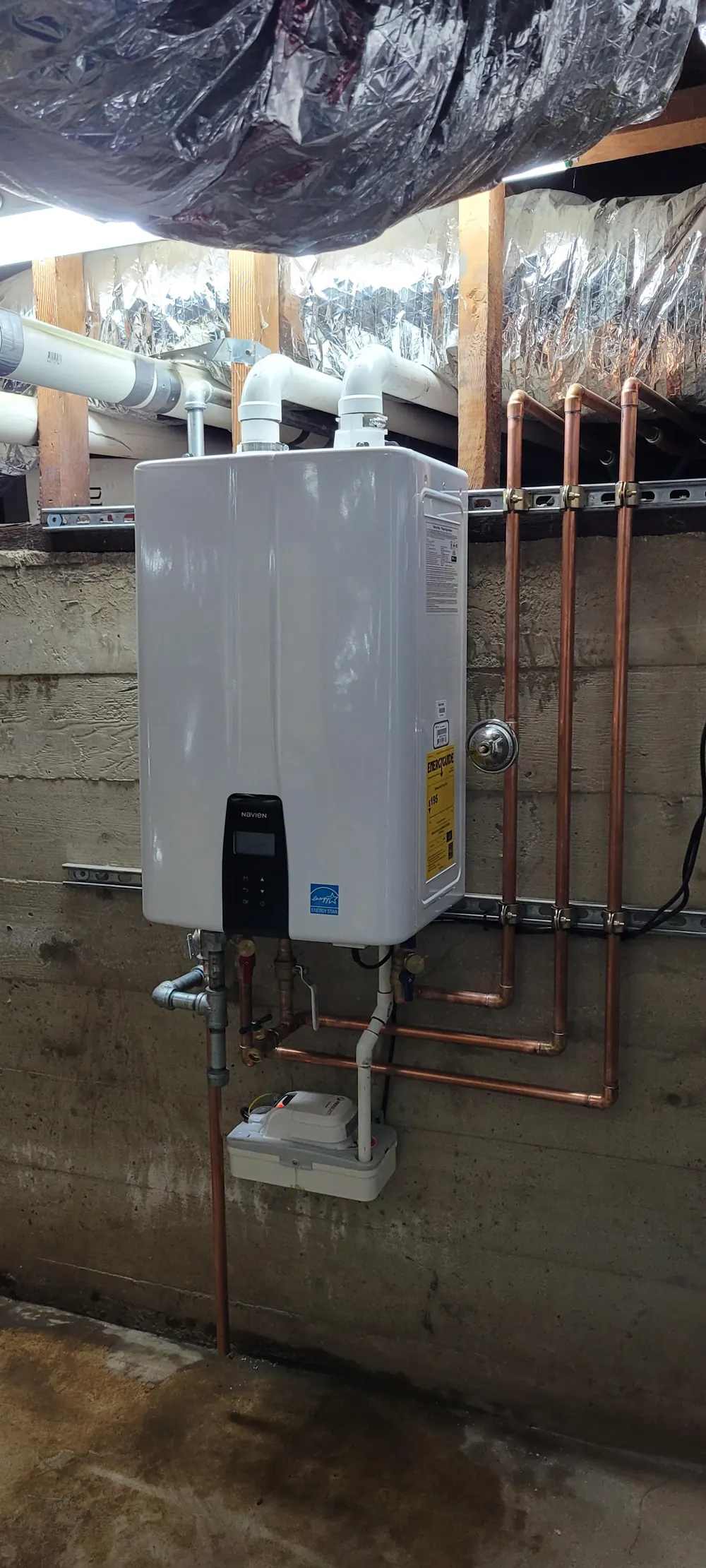
How often should a tankless water heater be flushed in a hard-water area like St. Louis County? Annually, without exception, and twice a year where scale has already shown itself. Our regional water carries dissolved limestone minerals straight to the heat exchanger, and the flush is what stands between you and a sluggish, warranty-complicated repair bill.
What Hard Water Actually Does in There
Regional surface supplies carry calcium and magnesium dissolved from limestone geology, and treatment plants do not remove them because hardness is a nuisance, not a health hazard. Inside a tankless exchanger, those minerals precipitate on the hot coil walls. The scale layer insulates the water from the flame, so the unit burns longer to deliver the same degree, and the flow sensor starts reading a smaller pipe than you bought.
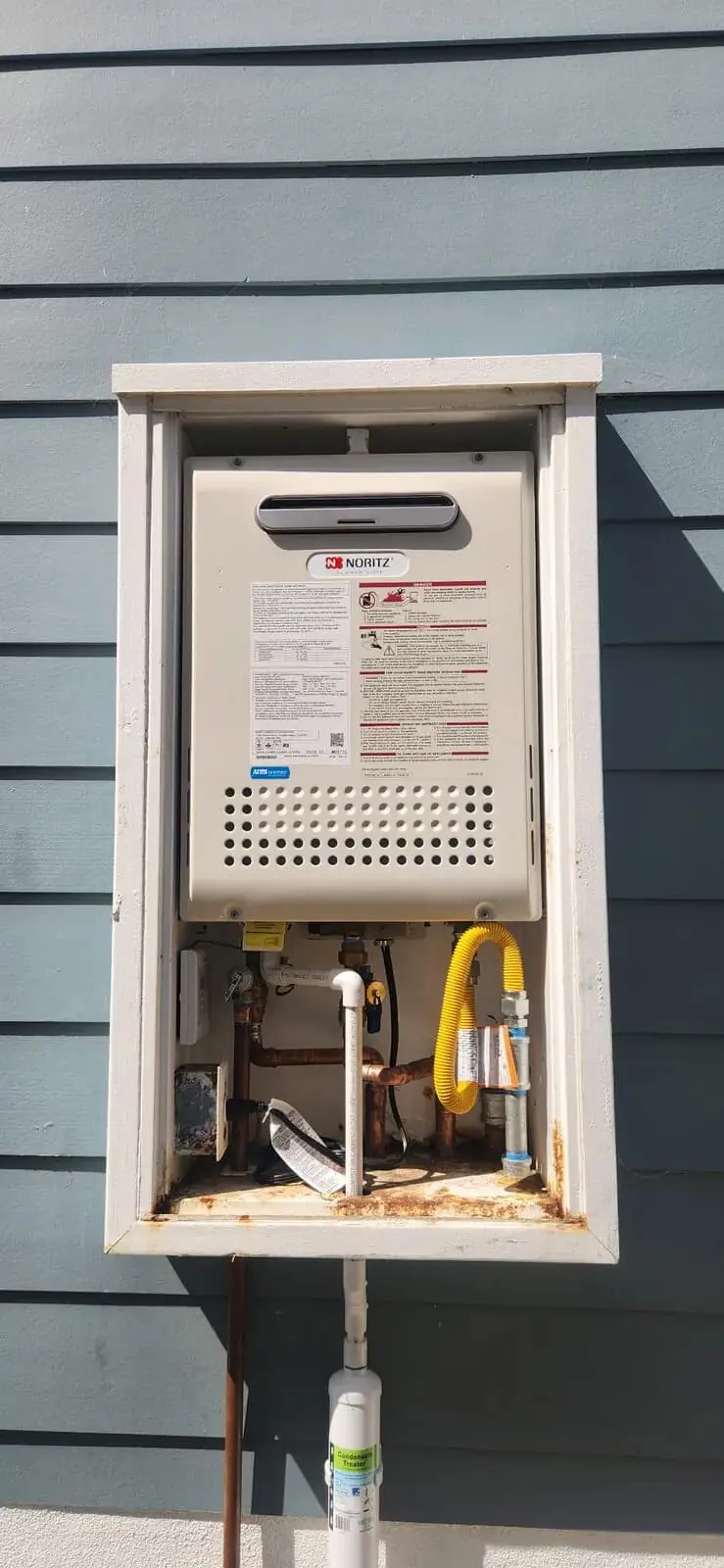
The Warning Signs of a Descaled-Too-Late Unit
- Flow feels down: showers that used to roar now politely stream.
- Temperature swings: the unit cycles hot-cool as the sensor fights scale buildup.
- Error codes: many units log high-temperature-limit or flow faults when scale narrows the coil.
- Gas bills creeping: longer burn cycles for the same hot water, every single day.
The Annual Flush: What Actually Happens
A proper descale isolates the unit with its service valves, circulates a food-grade descaling solution (vinegar-based or manufacturer-approved) through the exchanger with a small pump for an hour or so, then rinses, reconnects and tests full performance. It is a quiet, clean service visit, and the difference on a badly scaled unit is audible the same day. Every installation we do includes accessible flush ports precisely so this service stays quick and inexpensive; units installed without them cost more to maintain, which is a quiet installation-quality test.
Build the Schedule That Fits Your Water
- Year one: annual flush, no debate. Calendar it with the smoke-detector batteries so it actually happens.
- If scale shows early: the tech may recommend a six-month interval for a year, then back to annual.
- Whole-home softening or filtration? Flushing stays annual; softened water still carries some mineral exchange, and the filter media’s condition matters as much as the schedule.
- Selling or warranty claims: service records matter. Keep the invoices; manufacturers ask, and documented maintenance settles warranty conversations fast.
The Maintenance Math
An annual flush costs a fraction of an exchanger replacement and protects the efficiency that justified the unit in the first place. Households that treat the flush as optional eventually meet us for the expensive version of the same appointment. The tankless installation team sets up flush ports and first-year service on every install, and the tank versus tankless guide covers how maintenance fits the ownership math. Scheduled regularly, your tankless unit simply does its job for years: endless hot water, quietly, in hard-water country.
What a Professional Flush Visit Includes, Minute by Minute
Homeowners are often surprised how uneventful a proper descale visit is, so here is the honest playbook. The tech starts by killing power or gas to the unit and closing the service valves, which every install should include. A small pump and bucket loop connects at the flush ports, and food-grade descaling solution circulates through the heat exchanger for forty five minutes to an hour, depending on what the flow rate says about buildup. While it runs, the inlet filter screens get rinsed, the condensate trap gets checked, and the venting gets a visual once-over. Then the loop drains, the exchanger rinses with fresh water until it runs clear, valves reopen, and the unit fires for a live test: incoming versus outgoing temperature, flow rate, and error history on the display. On a badly scaled unit the before-and-after flow difference is obvious within a minute. On a well maintained one, the visit is quiet insurance, and the service record it generates is what keeps manufacturer warranties standing when it matters.Between professional visits, two habits keep the unit honest: keep the area around it clear enough to hear it and reach the valves, and pay attention when hot water delivery starts feeling different at a fixture you use daily. Small changes in flow or temperature are how descaled units whisper before they shout, and a note to yourself about when the change started makes the next service visit faster.