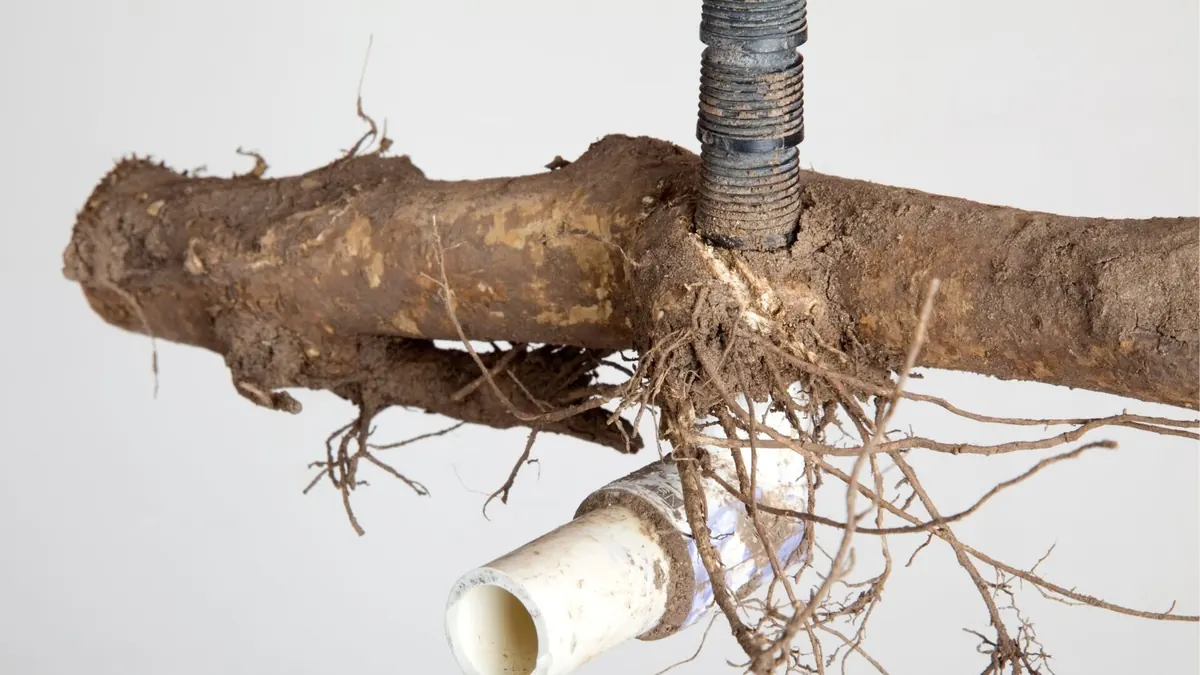
Why do tree roots keep finding their way into your sewer line? Because your sewer line is the most attractive object in the yard: a pipe full of water and nutrients, venting warm vapor, with joints that older construction sealed imperfectly. Roots are not malicious; they are opportunists. Understanding their entry plan is how you end the cycle of annual clogs.
Why Roots Choose Your Pipe
Mature trees in established West County neighborhoods run root systems wide and thirsty. Vapor escaping through tiny joint gaps or hairline cracks attracts fine root hairs, which thread inside, thicken year over year, and eventually dominate the pipe bore. Clay laterals with hubs-and-gaskets, standard in mid-century construction, offer the most doors; PVC with fused joints offers the fewest. That single material fact explains why some streets clear clogs every spring and others never think about it.
The Damage Timeline
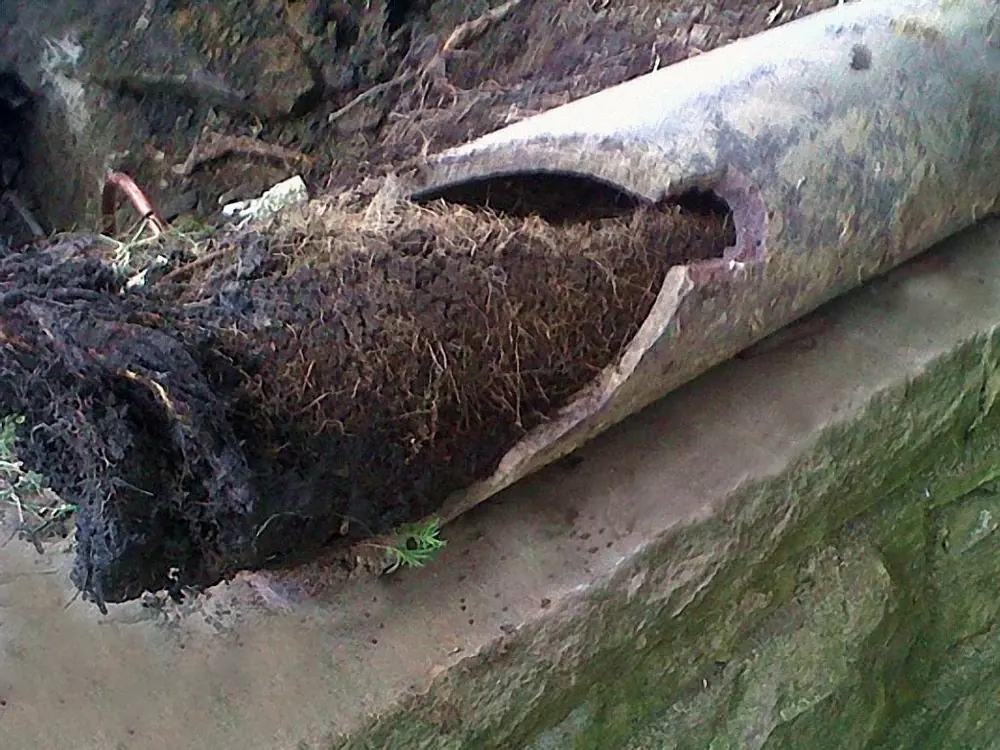
Stage one is fuzz: fine roots matting the joint, catching paper and grease, slowing drains. Stage two is the mass: a root ball filling the bore, backing up fixtures after heavy water use. Stage three is structural: the root’s girth widens the joint, soil infiltrates, the pipe sags or collapses, and the repair conversation jumps from clearing to replacement. Every stage one intervention is cheap; every stage three one is not.
The Solutions, Ranked by Cycle-Breaking Power
1. Mechanical clearing (resets the clock)
Cable machines cut the mass out; hydro jetting shears it back to the joint and scours the walls clean. Either restores full flow, and jetting lasts meaningfully longer because it removes the residue roots regrow from. What neither does is close the door behind them.
2. Chemical maintenance (slows the regrowth)
Foaming root treatments applied after a cleaning kill root hairs inside the pipe and delay the return. Used on a schedule, they stretch the intervals between mechanical cleanings. They are a maintenance tool, not a structural fix, and they work best alongside camera monitoring.
3. Pipe lining (ends the cycle)
Cured-in-place lining seals every joint and crack in one continuous new pipe, without digging up the yard. Roots outside stay outside; the door they kept reopening no longer exists. Where the host pipe qualifies structurally, lining is the definitive answer to stage-one and stage-two intrusion.
4. Replacement (ends the material story)
Where roots have collapsed or deformed the pipe beyond lining, replacement with modern PVC on proper bedding resets the whole problem for decades. Our sewer line repair team prices both paths from the same camera footage so the comparison is real.
Prevention Between Services
- Camera on a schedule: an annual or biennial look catches regrowth at the fuzz stage, when a cleaning is all it costs.
- Mind the menu: grease and paper give roots something to anchor on; keep both out of the line.
- Plan new plantings: keep water-hungry species away from the lateral path; the yard map our inspections create makes that easy.
- Treat early warning seriously: gurgling fixtures and slower drains are stage one, and stage one is the cheap one.
The Chesterfield Pattern
Our inspection calendar makes the local story plain: the mature canopy neighborhoods east of Clarkson Road and across Wildwood produce the recurring root calls, while newer PVC subdivisions mostly see roots only where joints were installed poorly. Either way, the sequence holds: see the pipe, clear it properly, then close the doors. Homeowners who follow it stop being customers; homeowners who skip it know our spring schedule by heart.