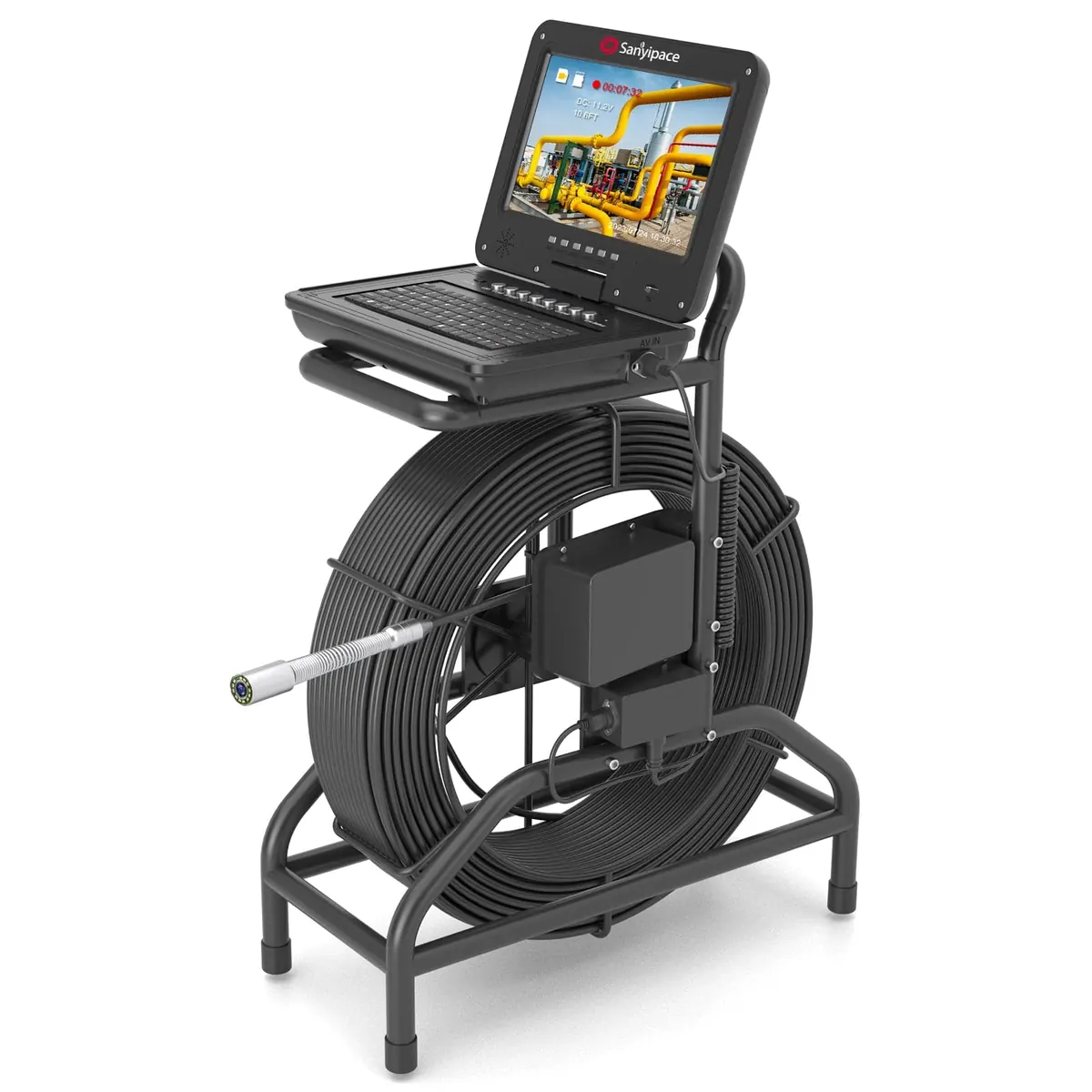
What exactly happens during a sewer camera inspection? A waterproof camera on a flexible reel travels your lateral from the cleanout toward the city connection while a technician narrates what you are watching on screen. Depth and distance are logged at every finding, the run is recorded, and you leave with footage that turns sewer questions into sewer facts.
What the Camera Can See
- Root intrusion: fuzzy masses at joints, ranked from hairline fuzz to full blockage.
- Cracks and offsets: splits, stepped joints and separated sections, with their exact distances marked.
- Bellies: grade sags where water pools, visible as standing water in the run.
- Scale and grease: narrowed walls and coatings that explain chronic slowdowns.
- Foreign objects and collapses: the toy from 2014, the section that gave up, and everything between.
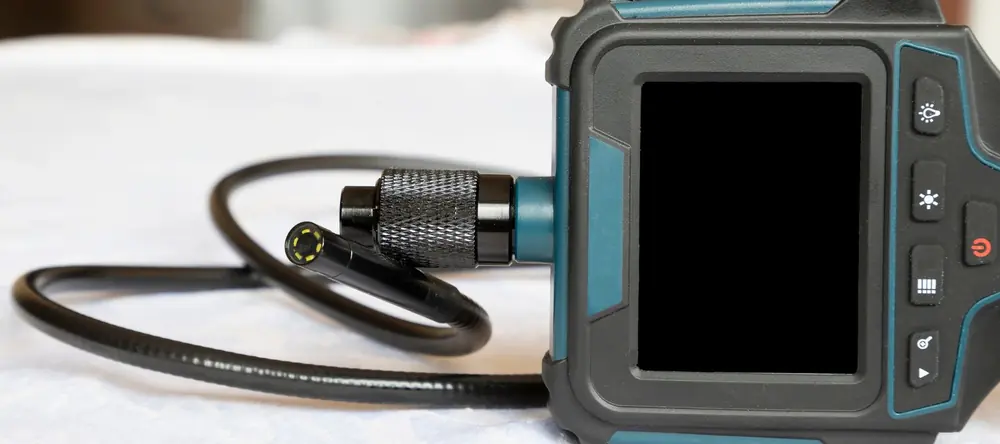
The Four Moments That Justify One
1. Before you buy the house
A lateral is a five-figure liability hiding under a lovely lawn, and mid-century clay laterals under mature trees are the classic version. An inspection during the option period is cheap leverage: clean footage gives confidence, and problem footage gives negotiating power. After closing, the same information is just a bill.
2. When backups repeat or resist explanation
Two main-line clogs inside a year is a pattern, and patterns mean structure. The camera answers the question the cleanings keep dodging: roots, belly, crack or scale, each pointing to a different next move.
3. Before any big sewer quote
No reputable contractor should price major sewer work without looking. If a quote arrives without footage behind it, get the inspection first; our camera inspection is credited toward repair work precisely so that order is easy.
4. Before construction over the pipe path
Pools, additions, decks and deep landscaping projects all interact with buried utilities. Mapping the lateral before design protects the pipe, the project and the budget.
What a Good Inspection Includes
The difference between a camera pass and a real inspection is documentation. Expect: a live on-screen walkthrough, depth and distance logging at each finding, a recording you keep, and a plain-English summary that says what the pipe is and what it means. Findings without locations are anecdotes; findings with footage and coordinates are planning documents. If a fault needs repair, the same footage drives a fixed quote from the sewer line repair or trenchless teams, and the diagnostic fee applies to the work.
How to Read the Report You Get Back
A useful inspection report has three layers, and you should expect all of them. First, the footage itself, kept as a file you own. Second, the fault log: each finding with its distance from the access point and its depth below grade, because those two numbers are what convert a finding into a fixed-price repair quote. Third, the plain-English summary that says what the pipe is made of, what condition it is in overall, and which findings matter now versus which are worth watching. If a report skips the distance and depth logging, ask for it; those numbers are the difference between a precise spot repair and an exploratory dig, and between a program application that qualifies and one that stalls.
The Calm-Weather Case
The best inspection is the one scheduled before anything is wrong. A baseline run in a healthy pipe costs little, documents condition for the file, and turns every future symptom into a before-and-after comparison. Homeowners who hold footage of their lateral make every downstream decision, repairs, programs, insurance, resale, faster and cheaper. It is the rarest kind of plumbing service: the one you book hoping nothing needs fixing.