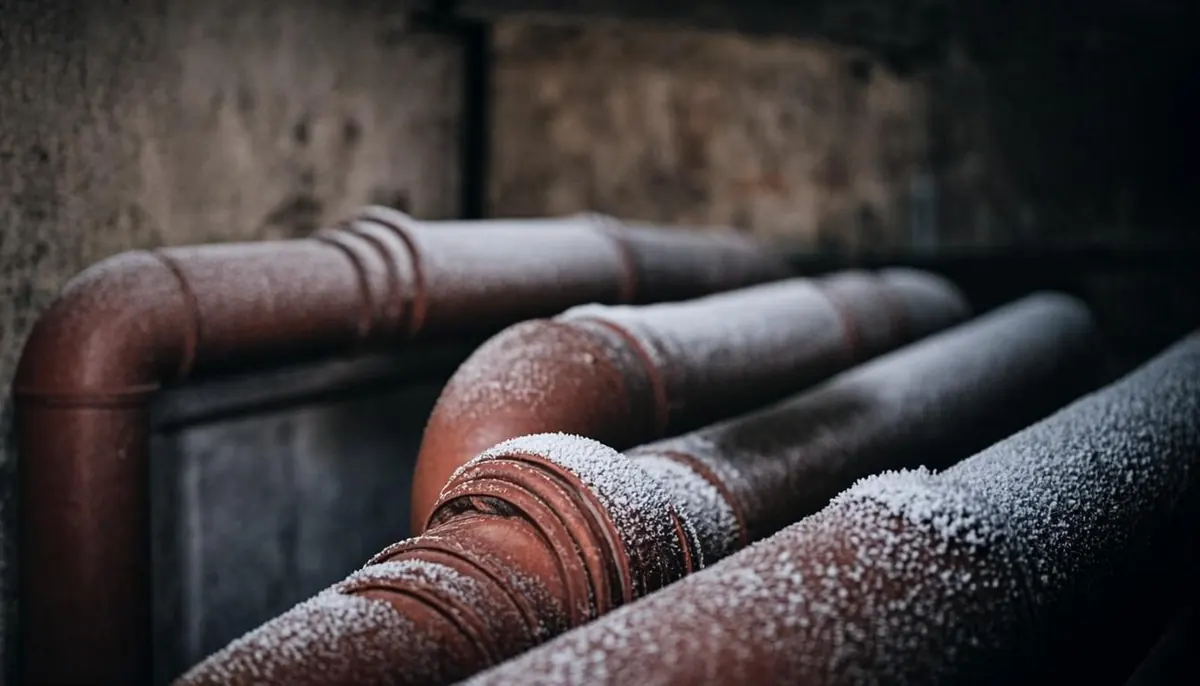
How do you keep pipes from freezing during a St. Louis County winter? You protect the three things cold exploits: exposed runs, unheated spaces and forgotten fixtures. This guide is the checklist we hand neighbors every fall, tuned to the freeze-thaw pattern our region actually gets.
Who Freezes First: The Usual Suspects
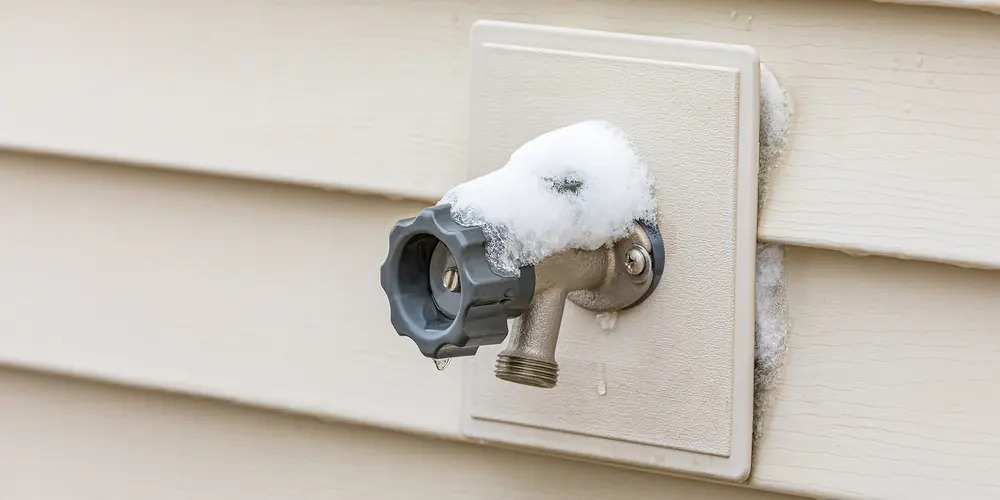
The American Red Cross’s frozen pipe guidance is blunt about the list: outdoor hose bibs, pool and sprinkler supply lines, and water pipes in unheated interior areas like basements, crawl spaces, attics, garages and kitchen cabinets, plus any line running along an exterior wall with little insulation, per the Red Cross. In West County housing, add the local favorites: garage-ceiling laundry lines, bonus-room plumbing over uninsulated spaces, and the hose bib the family forgot because the spigot is behind the shrubs.
The Pre-Winter Checklist (One Weekend, Early November)
- Drain and disconnect outdoor hoses. A connected hose keeps water in the spigot body where it can freeze and split. Close the interior supply valve to each hose bib, open the outdoor faucet to drain, and leave it open a crack through winter.
- Insulate the exposed runs. Foam sleeves on pipes in garages, crawl spaces and along exterior walls; UL-listed heat tape or heat cable on the runs with a history. The Red Cross notes even a quarter inch of newspaper helps in moderate climates, but proper sleeves are the standard we install.
- Seal the air leaks. Cold wind on a pipe matters more than cold air near it. Caulk penetrations where cable lines, hose bibs and vents pass through siding.
- Find and exercise the main shut-off. Every winterization plan has a chapter zero: knowing how to close the main in ten seconds. If that walk ends in confusion, our shut-off valve guide has photos for every house style.
- Check the sump pit. Freeze season is also ice-storm season in Missouri, and power outages during thaw events are real. A tested pump with battery backup is winter armor; our sump pump service includes a load test.
During the Cold Snap: The Night-of Routine
- Let faucets drip served by vulnerable runs. Moving water resists freezing, and a pencil-thin stream is enough, per the Red Cross.
- Open cabinet doors under sinks on exterior walls so warm room air reaches the plumbing.
- Hold the thermostat steady. The Red Cross recommends leaving heat no lower than 55°F when away, and skipping the nighttime setback during the coldest stretches. The heating bill difference is trivial next to a burst wall.
- Close garage doors where supply lines run through or above the garage ceiling.
If a Pipe Freezes Anyway
A faucet that only sputters is the early warning. Keep that faucet open, apply gentle heat with a hair dryer or heating pad working from the faucet back toward the freeze, and never use open flame. If flow does not return quickly, or you find a bulge, stop and call: a controlled thaw by a technician costs less than the repair after a DIY torch attempt, and our burst pipe team handles both the thaw and the pressure test that follows.
The Local Angle: Why Spikes Beat Averages
Our service calendar tells the story. Burst pipe calls cluster not in deep January but in the first hard cold snap of December and the last treacherous one of March, when homes have not fully winterized or insulation has been disturbed. Homes in the established neighborhoods east of Clarkson Road add their own wrinkle: original copper runs that have thinned at the elbows over decades. Freeze-proofing those specific lines is a one-visit project that quietly removes our number from your speed dial, which is exactly the outcome we prefer.